Getting Around Bali: Transportation Tips for Stress-Free Travel
Travel Tips

Getting Around Bali: Transportation Tips for Stress-Free Travel

14 Min Read
12 August 2026
Blog & Article / Getting Around Bali: Transport...

Getting Around Bali: Transportation Tips for Stress-Free Travel

Bali doesn't have a widespread public transit system, so figuring out how you'll get around is one of the more important planning decisions for your trip — arguably more important than picking which attractions to see, since it affects how much of your day is spent traveling versus actually doing things. Here's a breakdown of the main options.

Renting a Scooter

Scooters are the classic way to get around Bali, and for good reason — they're cheap (often $5–8/day), flexible, and can weave through traffic that would stall a car. That said, they come with real trade-offs: Bali's traffic can be chaotic, road rules aren't always followed consistently, and an international driving permit plus a motorcycle endorsement is technically required (and increasingly checked, along with helmet use). Scooters make the most sense for shorter distances within one area — Canggu to Seminyak, for example — rather than long cross-island drives.

Hiring a Private Driver

A private driver is the most comfortable option for visitors who'd rather not navigate Bali's traffic themselves, especially for full-day tours or transfers between regions (say, from the airport to Ubud, or Ubud to Uluwatu). Drivers who know the roads well can also help with route timing — leaving early to beat traffic to popular sunrise spots, for example — which is hard to replicate on your own. This is generally the best option for families, groups, or anyone with a packed multi-stop itinerary.

Ride-Hailing Apps

Apps like Gojek and Grab work well in Bali for shorter trips within a single area, and are often cheaper than taxis for point-to-point rides. Coverage and pickup ease can vary by location — some tourist zones restrict app-based pickups in certain spots, requiring you to walk to a nearby main road. They're a solid option for restaurant runs or short hops, less practical for full-day sightseeing.

Renting a Car

Self-driving a car is less common among tourists, partly because of Bali's narrow roads, aggressive traffic patterns in tourist areas, and limited parking at popular sites. It can make sense for confident drivers wanting more privacy and flexibility than a scooter offers without hiring a driver, but it's worth going in with realistic expectations about traffic, particularly around Seminyak, Canggu, and Ubud during peak hours.

Taxis

Metered taxis (Blue Bird is the most trusted brand) are widely available in more developed areas and airports. Always confirm the meter is running, or agree on a fixed price beforehand if it isn't — unmetered taxis targeting tourists are a known issue in some areas.

Matching Transport to Your Trip Style

  • Solo traveler, short distances, comfortable riding: scooter

  • Multi-day touring, groups, families, minimal hassle: private driver

  • Mostly staying in one area, occasional short trips: ride-hailing app

  • Longer trip, confident driving in unfamiliar traffic: rental car

Many travelers end up mixing two or three of these — a scooter for local trips around their base, and a private driver for full-day tours or inter-region transfers.

A Note on Travel Times

Google Maps estimates in Bali can be misleading during peak traffic hours (roughly 7–9am and 4–7pm) or around ceremonies that temporarily close roads. Adding a buffer of 30–60 minutes for cross-region trips, especially in and around Denpasar, Canggu, and Ubud, will save you from arriving late or stressed.


Recent Post

How to Plan Your First Trip to Bali: A Complete Travel Guide

How to Plan Your First Trip to Bali: A Complete Travel GuideBali is a manageable destination to plan for, but it's also easy to overbook, underestimate travel times between regions, or land without a clear sense of where to base yourself. Here's a step-by-step approach to putting together a first trip.1. Decide When to GoBali has two main seasons: dry (roughly April to October) and wet (November to March). Dry season brings more consistent weather and is peak tourist season, especially July, August, and the Christmas/New Year period — expect higher prices and more crowds at popular sites. Wet season still offers plenty of sunny days between showers, shorter lines, and better rates, so it's worth considering if flexibility matters more to you than guaranteed sunshine.2. Check Visa RequirementsMany nationalities can enter Indonesia with a Visa on Arrival (VOA), valid for 30 days and extendable once for another 30. Requirements and eligible countries change from time to time, so it's worth checking Indonesia's official immigration site or your nearest consulate close to your travel date rather than relying on older information.3. Choose Your Base (or Bases)Bali is bigger than first-time visitors often expect, and traffic can turn a short distance on the map into an hour-long drive. Rather than basing yourself in one place for a two-week trip, consider splitting your stay: - Ubud — culture, rice terraces, wellness, cooler climate - Seminyak/Canggu — beach clubs, surf, nightlife, cafés - Uluwatu — cliffside views, surf breaks, quieter beaches - Sanur — calmer beaches, good for families or a slower pace - East Bali (Amed, Sidemen) — less touristed, diving, mountain viewsA common pattern for a 7–10 day trip is two or three bases rather than one, moving every few days.4. Budget RealisticallyBali can flex from budget backpacking to high-end luxury. As a rough guide: budget travelers might spend $30–50/day (guesthouse accommodation, warung meals, scooter rental); mid-range travelers $80–150/day (private villas or 3–4 star hotels, mix of dining, some tours); and luxury travelers considerably more, especially with private villas and drivers. Entrance fees for temples and attractions are generally low (often under $5), but adventure activities and day trips (rafting, diving, private tours) add up faster.5. Build a Loose Itinerary, Not a Packed OneIt's tempting to fill every day with activities, but Bali rewards a slower pace — traffic, heat, and the sheer number of worthwhile stops mean an overpacked schedule often leads to rushing through things rather than enjoying them. A reasonable rule of thumb: one major activity or destination per day, with flexibility for spontaneous stops.6. Decide on Transport EarlyHow you get around shapes your whole trip more than most people expect — covered in more detail in our guide to getting around Bali. Broadly, your options are: renting a scooter (cheap, flexible, but requires experience and an international license), hiring a private driver (more comfortable, no navigation stress, good for groups or longer trips), or using ride-hailing apps (works well within a single area, less practical for full-day tours).7. Book Accommodation and Activities in Advance for Peak SeasonDuring July, August, and the December holiday period, popular villas and well-reviewed tours can book out weeks ahead. Outside peak season, there's more room to book things a few days out or even on the ground.8. Pack for Humidity and Temple VisitsLightweight, breathable clothing is essential, but so is at least one modest outfit (covered shoulders, and a sarong if you don't want to rely on rentals) for temple visits. A reusable water bottle and reef-safe sunscreen are worth packing too, given the heat and the number of coral reef areas around the island.

Bali's Sacred Traditions: Temple Ceremonies and Cultural Etiquette for Travelers

Bali's Sacred Traditions: Temple Ceremonies and Cultural Etiquette for TravelersBali's culture is inseparable from its religion. Balinese Hinduism, distinct from Hinduism practiced elsewhere, shapes daily life on the island — from the small offerings placed on sidewalks each morning to the elaborate ceremonies that can shut down entire villages for a day. Understanding a bit of this before you visit makes the experience richer, and helps you avoid a few common missteps.Canang Sari: The Daily Offerings You'll See EverywhereThose small palm-leaf trays filled with flowers, rice, and incense that you'll see on doorsteps, sidewalks, and dashboards are called canang sari — daily offerings of gratitude placed by Balinese Hindus. They're easy to accidentally step on if you're not looking down, so it's worth watching your step, particularly around temple entrances and shopfronts.What to Wear When Visiting a TempleMost temples require visitors to wear a sarong, and often a sash tied around the waist, regardless of gender. Many temples rent or lend these at the entrance, but bringing your own (easily bought at local markets) saves time and hassle. Shoulders should generally be covered as well. Some inner temple areas are closed to visitors entirely, particularly during ceremonies — signage or staff will usually indicate this.Menstruation and Temple AccessTraditionally, women who are menstruating are asked not to enter temple grounds. This isn't enforced with any kind of check, but it's a genuine part of local belief, and respecting it (rather than treating it as an inconvenience to work around) is part of being a considerate guest.Attending a Ceremony as a VisitorIf you happen to be in a village during a ceremony — a temple anniversary (odalan), cremation, or tooth-filing ritual, for example — you may be welcome to observe respectfully from a distance, and sometimes invited to join. Dress modestly, keep noise to a minimum, avoid pointing your feet at offerings or shrines, and ask before taking photos, especially of people in prayer.Nyepi: The Day of SilenceOnce a year, Bali observes Nyepi, a Balinese New Year marked by complete silence across the island. No flights in or out, no lights after dark, no one on the streets — even tourists are required to stay inside their accommodation for the full 24 hours. If your trip overlaps with Nyepi, it's worth planning around it in advance, since it affects transport, dining, and activities island-wide for that day.Basic Etiquette Beyond TemplesA few general points that apply island-wide: use your right hand (or both hands) when giving or receiving something, avoid touching people's heads, and keep public displays of affection modest, particularly outside of tourist-heavy beach areas. None of this is strictly enforced for visitors, but it reflects genuine local values, and Balinese hosts generally notice and appreciate the effort.Supporting Local Traditions as a VisitorCeremonies, temple maintenance, and traditional arts are largely funded and organized by local communities (banjar) rather than the government. Buying offerings, crafts, or entrance tickets directly from local vendors — rather than always going through large tour operators — is a small way to put tourism spending back into the communities keeping these traditions alive.Curious about visiting a temple ceremony respectfully, or timing your trip around Nyepi? Our local guides can help you plan around Bali's ceremonial calendar — get in touch before you book your dates.

A Food Lover's Guide to Balinese Cuisine: Must-Try Dishes

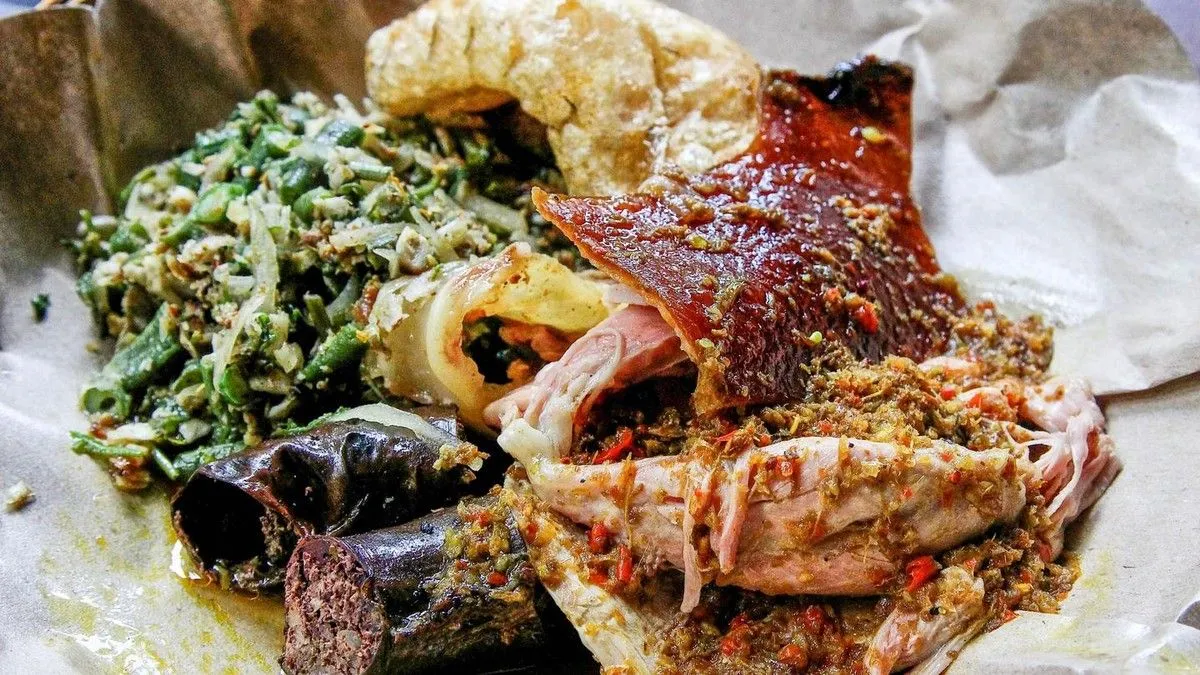
A Food Lover's Guide to Balinese Cuisine: Must-Try DishesBalinese food doesn't always get the spotlight that Balinese temples and beaches do, but it deserves just as much attention. Built around fresh spices, coconut, and rice, the island's cuisine reflects both its Hindu religious traditions and its position along historic Southeast Asian trade routes. Here's what to look for on menus and warung boards.Babi Guling (Suckling Pig)Often considered Bali's signature dish, babi guling is whole pig roasted over an open fire and stuffed with a mix of turmeric, galangal, garlic, chili, and other spices known as base genep. It's traditionally served for ceremonies and celebrations, but plenty of warungs sell it daily — Ubud is particularly well known for it.Bebek Betutu (Slow-Cooked Duck)Bebek betutu is duck (or sometimes chicken, called ayam betutu) marinated in the same spice paste used for babi guling, wrapped in banana leaves, and slow-cooked for hours until the meat falls off the bone. It's less commonly found on standard menus, so it's worth seeking out at restaurants that specialize in it, since the long cooking time means it's often made to order.Nasi CampurNasi campur — literally "mixed rice" — is less a single dish than a format: a scoop of rice surrounded by small portions of vegetables, meat, tofu, tempeh, and sambal. It's the closest thing to a culinary sampler of Balinese home cooking, and every warung's version looks a little different.Sate LilitUnlike skewered sate found elsewhere in Indonesia, sate lilit is made from minced fish or meat mixed with grated coconut and spices, then pressed around lemongrass stalks or bamboo skewers before grilling. The lemongrass adds a subtle citrus note as it cooks.LawarLawar is a mix of finely chopped vegetables (often young jackfruit or long beans), grated coconut, and minced meat, seasoned with a rich spice paste. There are red (with blood) and white (without) versions — worth asking about if you're curious, or want to avoid one.Sambal MatahThis raw sambal — made from thinly sliced shallots, lemongrass, chili, and lime, then doused in hot coconut oil — is less a dish and more a condiment that shows up everywhere. It's sharper and fresher than cooked sambals, and a good way to add heat to whatever you're eating.Jaje Bali (Balinese Sweets)Traditional Balinese sweets — like klepon (rice cake balls filled with palm sugar), dadar gulung (pandan crepes with coconut filling), and laklak (small coconut-topped pancakes) — are commonly sold at local markets rather than restaurants, so a morning market visit is often the best way to try a range of them at once.Where to Eat: Warungs vs. RestaurantsFor an authentic, budget-friendly introduction to Balinese food, local warungs are hard to beat — many operate as family businesses with recipes passed down through generations. Restaurants aimed at tourists tend to adjust spice levels and presentation, which isn't a bad thing if you're easing into the cuisine, but it's worth trying at least a few warung meals for a truer sense of local flavor.A Note on Spice LevelsBalinese food can run spicy, particularly anything built around sambal. If you're sensitive to heat, it's fine to ask for sambal on the side — most places are used to the request, especially in more touristed areas.